
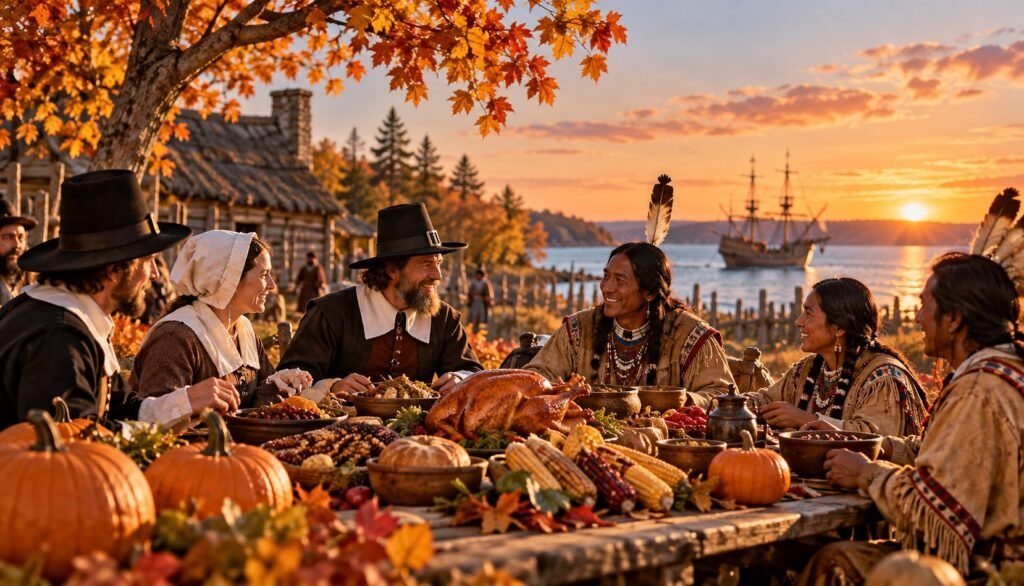
Every November, millions of Americans gather around dinner tables filled with turkey, mashed potatoes, pumpkin pie, and family favorites. But Thanksgiving is about much more than a delicious meal.
Understanding Thanksgiving history means exploring harvest celebrations, cultural traditions, gratitude, and the complex relationship between European settlers and Native American communities.
So, what is Thanksgiving, where did it come from, and why do Americans celebrate it today?
Let’s explore the history of Thanksgiving, its origins, traditions, and the meaning behind this annual celebration.
What Is Thanksgiving ?
Thanksgiving is a national holiday celebrated in the United States on the fourth Thursday of November.
It is traditionally a time for expressing gratitude, sharing meals, reconnecting with loved ones, and reflecting on the positive things in life.
Although Thanksgiving has historical connections to early harvest celebrations, its modern meaning extends far beyond agriculture.
For many Americans, it represents family, generosity, togetherness, and appreciation.
In 2026, Thanksgiving falls on Thursday, November 26.
Thanksgiving History: Origins and Early Traditions
Thanksgiving history reflects centuries of harvest traditions, cultural exchange, and changing interpretations of gratitude in American society.
Thanksgiving Traditions Before 1621
The story of Thanksgiving did not begin with the arrival of European settlers.
For thousands of years, Indigenous communities throughout North America practiced traditions of giving thanks for harvests, nature, and the resources that sustained their lives.
The Wampanoag people, who lived in present-day Massachusetts and Rhode Island long before European settlement, had their own agricultural knowledge, cultural practices, and traditions of gratitude.
Understanding these earlier traditions provides important context for the holiday Americans recognize today.
What Happened at the First Thanksgiving in 1621 ?
One of the most famous events associated with Thanksgiving occurred in Plymouth, Massachusetts, in the autumn of 1621.
English settlers, commonly known as the Pilgrims, had survived an extremely difficult first year after arriving aboard the Mayflower in 1620.
With assistance from members of the Wampanoag community, including Tisquantum, also known as Squanto, the settlers learned valuable skills that helped them adapt to their new environment.
After a successful harvest, the Plymouth colonists held a celebration that lasted approximately three days.
Around 90 Wampanoag men, including their leader Ousamequin, also known as Massasoit, attended the gathering and contributed deer to the feast.
This event later became widely remembered as the “First Thanksgiving.”
However, historians emphasize that it was not the first celebration of gratitude in North America, nor was it the beginning of an uninterrupted annual holiday.
The History Beyond the Traditional Story
The relationship between European colonists and Native American nations was far more complicated than the familiar story of a peaceful shared meal.
European colonization brought devastating disease, displacement, conflict, and loss of Indigenous lands.
For some Native Americans, Thanksgiving is a time of family gathering and gratitude. For others, it is also an occasion to remember historical suffering and honor Indigenous ancestors.
Recognizing these different perspectives allows us to understand Thanksgiving with greater historical accuracy and respect.
Understanding Thanksgiving history means acknowledging both the traditions of gratitude and the experiences of Native American communities throughout the centuries.
How Thanksgiving Became a National Holiday
Thanksgiving gradually developed into a widely recognized American celebration over several centuries.
Different colonies and states observed their own days of thanksgiving, often associated with harvests, religious reflection, or significant events.
In 1863, during the American Civil War, President Abraham Lincoln proclaimed a national Thanksgiving observance in November.
Writer and editor Sarah Josepha Hale had spent years advocating for a national holiday.
In 1941, federal legislation established Thanksgiving as the fourth Thursday of November, creating the schedule Americans follow today.
How Do Americans Celebrate Thanksgiving Today ?
Thanksgiving celebrations vary from household to household, but several traditions remain especially popular.
- Sharing a Thanksgiving Dinner
The Thanksgiving meal is one of the holiday’s most recognizable traditions.
Families and friends gather around the table to enjoy favorite dishes, share stories, and spend time together.
- Expressing Gratitude
Many families take a moment before dinner to share what they are thankful for.
Some express appreciation for family, friendships, health, personal achievements, or the opportunity to spend time with loved ones.
- Watching the Thanksgiving Parade
The Macy’s Thanksgiving Day Parade in New York City has become a beloved holiday tradition.
Its giant balloons, marching bands, performances, and colorful floats attract spectators and television viewers across the country.
- Watching Football
Football is another major part of Thanksgiving culture.
Many Americans enjoy watching NFL games while preparing dinner or relaxing with family.
- Volunteering and Helping Others
Thanksgiving also inspires charitable activities.
Communities organize food drives, volunteer events, and holiday meals for people who need assistance.
These acts of kindness reflect the holiday’s themes of generosity and gratitude.
Traditional Thanksgiving Foods and Their Meanings
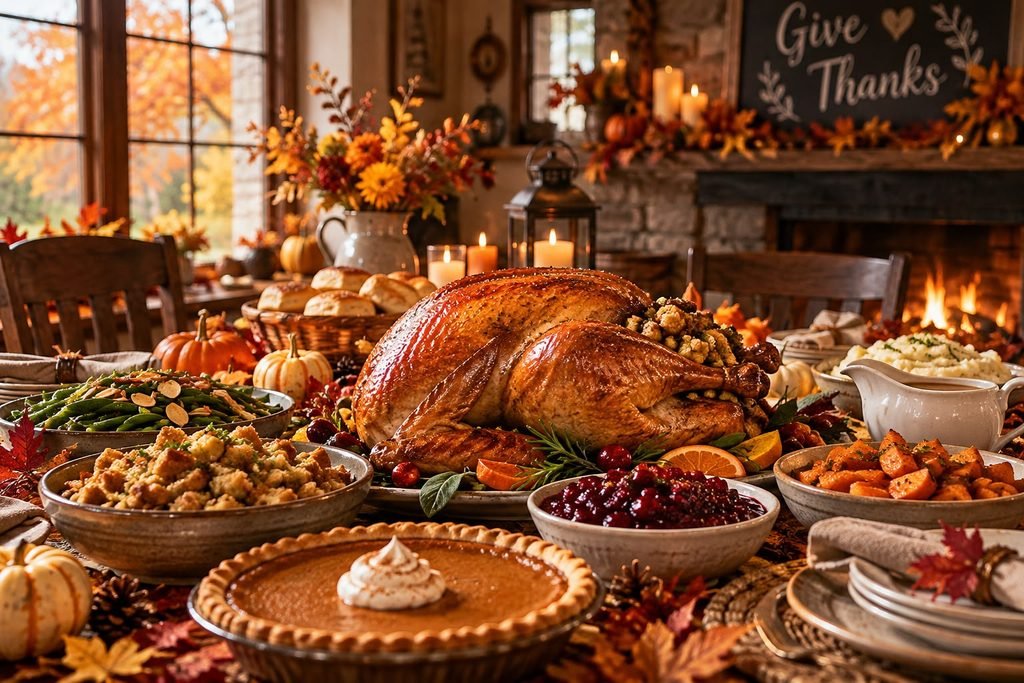
Food plays a central role in Thanksgiving celebrations, and many traditional dishes have become symbols of the holiday.
Roast Turkey: Perhaps the most recognizable Thanksgiving dish, turkey is commonly served as the centerpiece of the family meal.
Mashed Potatoes and Gravy: A comforting side dish enjoyed in households across America.
Stuffing or Dressing: A savory mixture often prepared with bread, vegetables, herbs, and seasonings.
Cranberry Sauce: Its sweet and tart flavor provides a contrast to the richer dishes on the table.
Sweet Potatoes: Often baked, mashed, or prepared as a casserole.
Pumpkin Pie: A popular autumn dessert associated with the harvest season.
Interestingly, the food served at the 1621 gathering was probably quite different from the modern Thanksgiving menu. Historical accounts identify wildfowl and venison among the foods served, while many familiar dishes developed into traditions much later.
Why Is Thanksgiving Important in American Culture ?
Thanksgiving holds a special place in American culture because it encourages people to slow down and reconnect.
In a busy world filled with work, school, technology, and everyday responsibilities, the holiday creates an opportunity to appreciate meaningful relationships.
It also brings together people from different backgrounds who may celebrate in their own ways.
Some families prepare traditional recipes passed down through generations. Others introduce dishes inspired by their cultural heritage.
While the celebrations differ, gratitude and togetherness remain central themes for many households.
Creative Ways to Celebrate Thanksgiving
Looking for ways to make Thanksgiving a little more memorable?
Consider organizing a family game night, preparing a recipe together, creating a gratitude jar, decorating your home with autumn colors, or taking a group photograph.
Matching outfits and seasonal designs can also add a playful touch to family gatherings.
Add a Little Thanksgiving Spirit to Your Celebration
Whether you’re hosting dinner, attending a Friendsgiving party, or spending a cozy day with family, festive clothing can make the occasion even more fun.
At DesignDraws, we love celebrating meaningful moments through creative designs.
Explore our collection of Thanksgiving-inspired apparel and find something that matches your holiday personality.
Explore Thanksgiving Designs at DesignDraws
Frequently Asked Questions About Thanksgiving
When Is Thanksgiving in 2026?
Thanksgiving in the United States will be celebrated on Thursday, November 26, 2026. The holiday always falls on the fourth Thursday of November.
Why Do Americans Celebrate Thanksgiving?
Americans celebrate Thanksgiving for many reasons, including expressing gratitude, gathering with loved ones, and continuing family traditions. The holiday also has historical connections to harvest celebrations.
Where Did Thanksgiving Originate?
Modern American Thanksgiving developed from several historical traditions. The 1621 harvest gathering in Plymouth, Massachusetts, is one of its best-known historical associations, although Indigenous peoples practiced traditions of thanksgiving long before European settlement.
Was Turkey Served at the First Thanksgiving?
Wild turkeys existed in the region, but surviving accounts do not confirm that turkey was served at the 1621 gathering. They do document wildfowl and venison.
Is Thanksgiving Celebrated Outside the United States?
Yes. Canada celebrates its own Thanksgiving holiday on the second Monday in October, with a different historical development. Other countries also have harvest festivals and traditions of gratitude.
Final Thoughts: The True Meaning of Thanksgiving
Thanksgiving is a holiday shaped by centuries of history, changing traditions, and different cultural perspectives.
While its historical background deserves thoughtful understanding, the modern celebration offers many people an opportunity to reconnect, express appreciation, and create meaningful memories.
Whether your Thanksgiving includes a traditional turkey dinner, a Friendsgiving celebration, volunteering, or a quiet evening with loved ones, the most meaningful part is often the time spent together.
Happy Thanksgiving from DesignDraws!